The problem
Before this platform, the Volition Pinball League ran entirely on Google Sheets. Every score was typed in by hand, standings were recalculated by hand, and schedules were built in a spreadsheet and passed around in group texts. Results came in late, mistakes crept in, and the commissioner spent each match night doing data entry instead of running the league. A new player had no real way to find the league, follow it or see where they stood.
I wanted the league to have what a pro sport has: live scores, standings, stats, player pages and a strong brand. And I wanted it to mostly run itself.
What it does
For players and fans
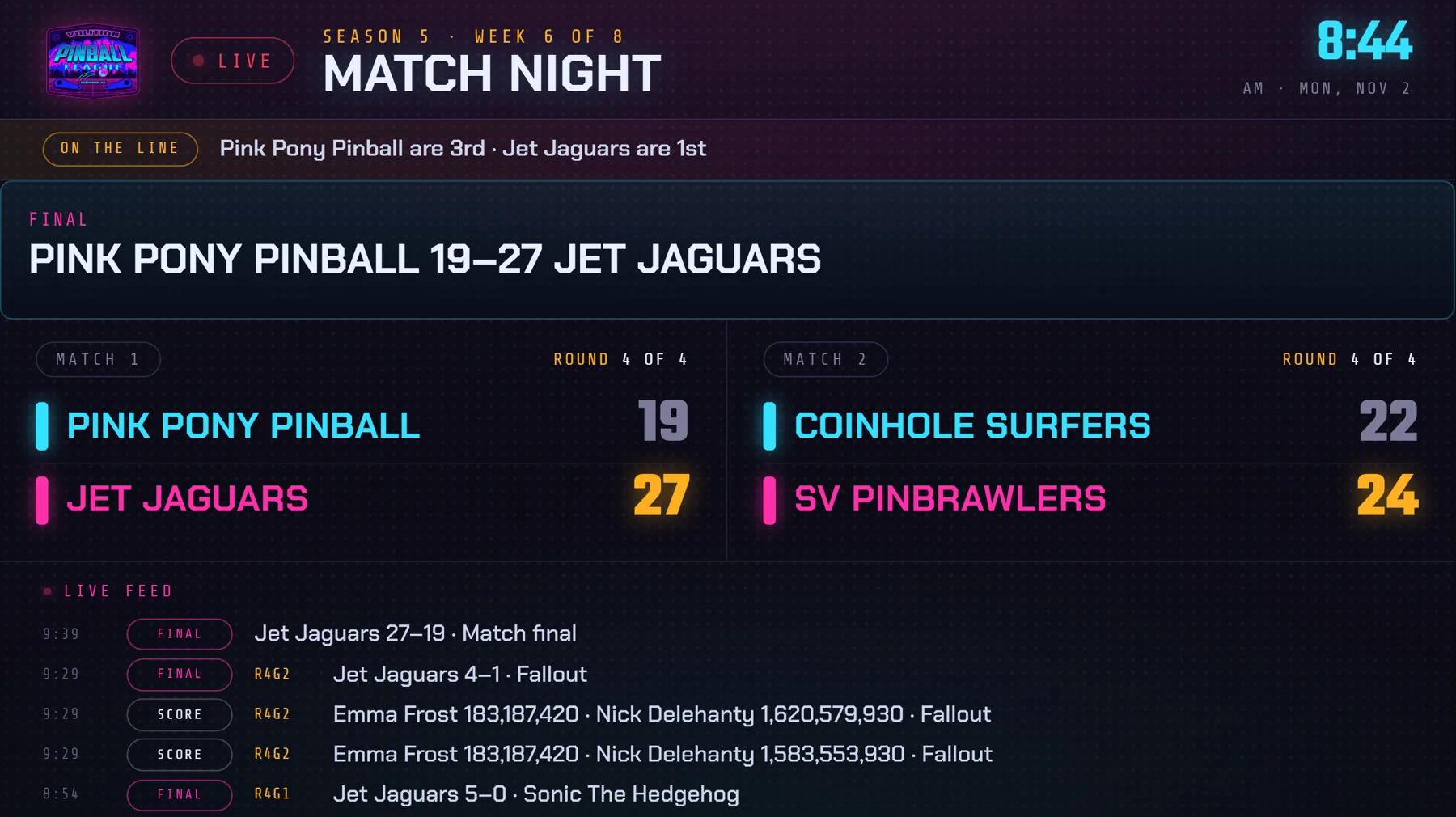
- Live match-night scoreboard. Results stream in as games finish, with a large-format TV mode for the taproom screens.
- Standings, schedules and results. Always current, with no manual updates.
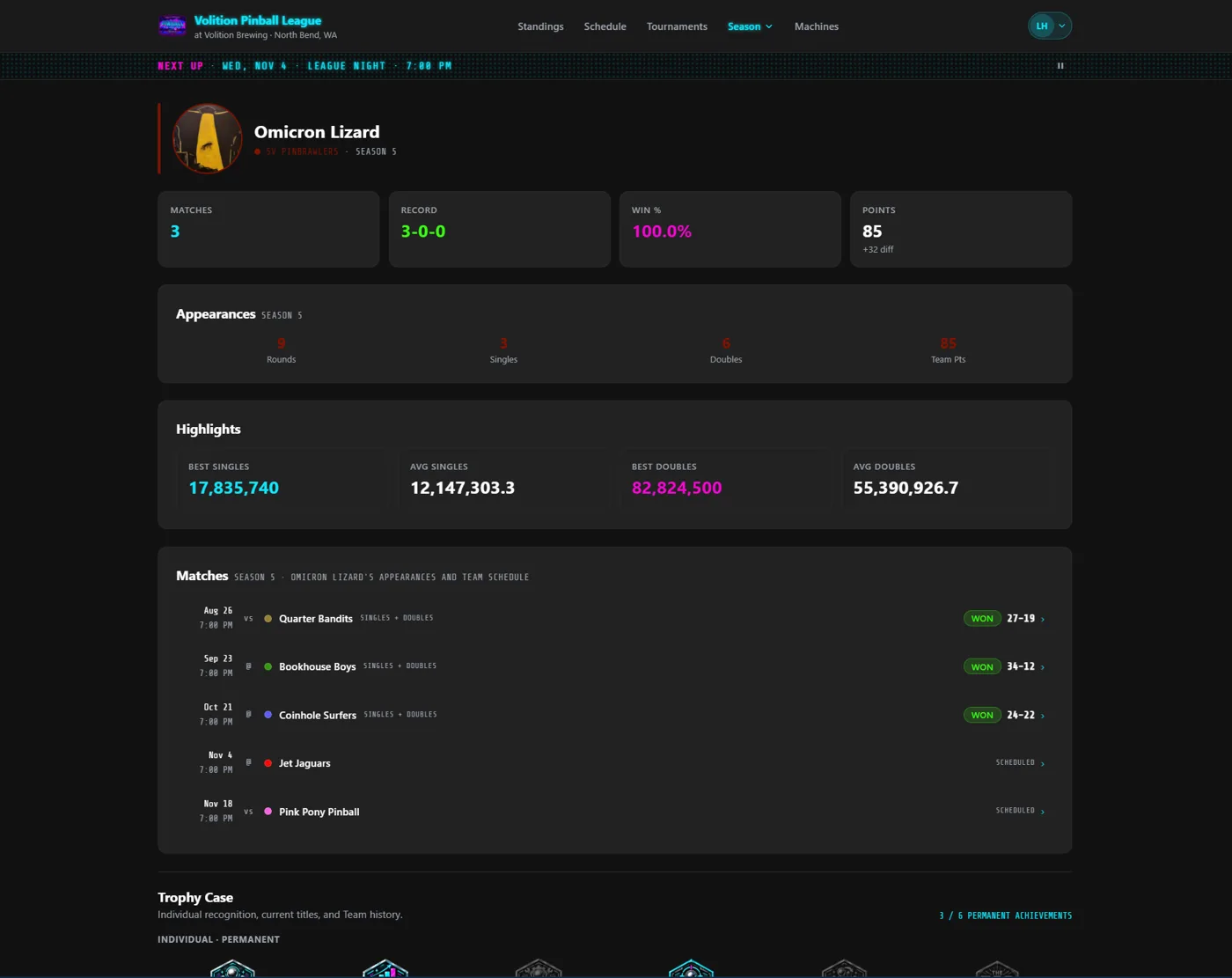
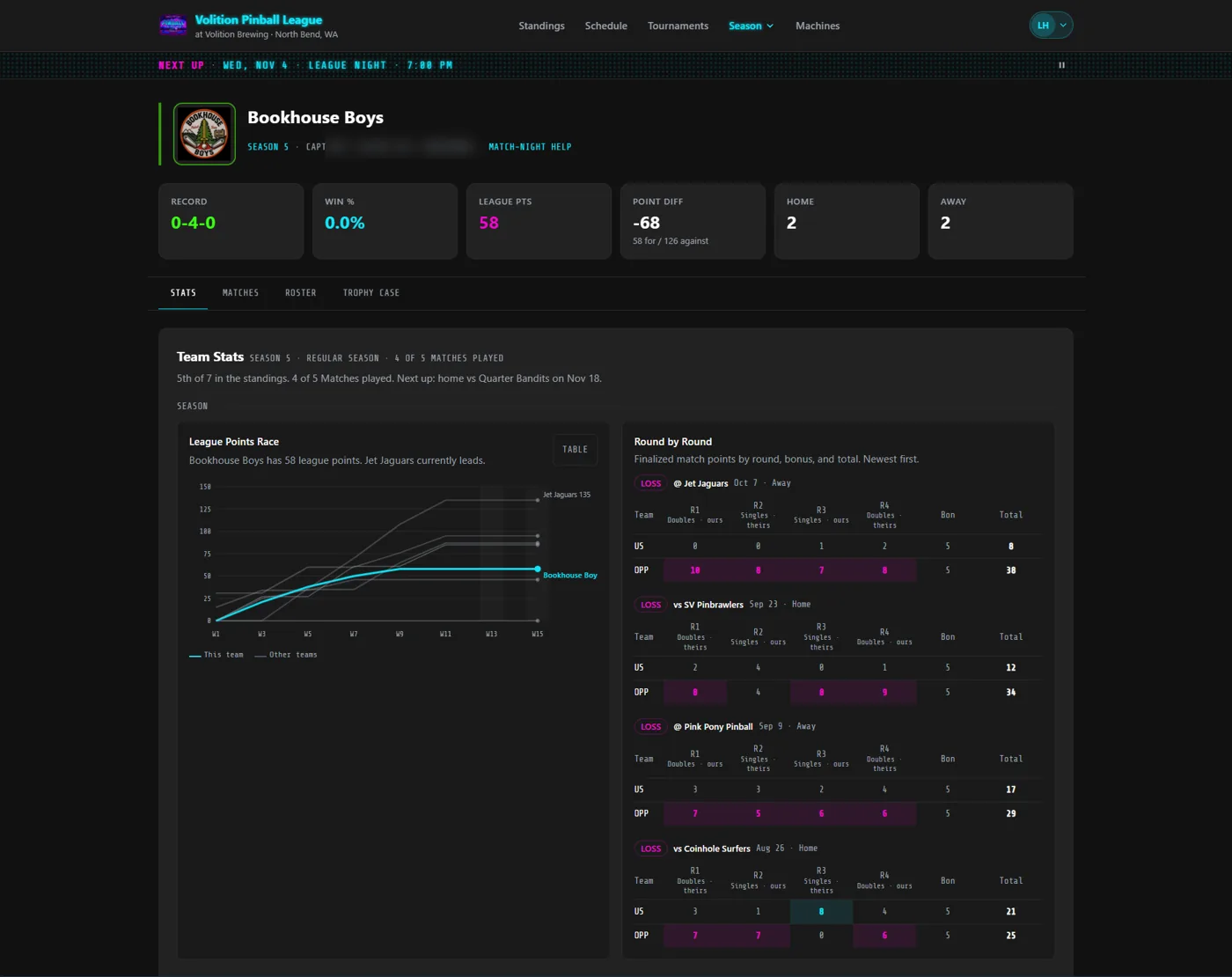
- Player and team pages. Career stats, match history, high scores by machine, trophy cases and season-by-season records.
- Achievements. A catalog of in-league accomplishments players collect over a season.
- Player ratings. Synced daily from Match Play, so every profile shows current skill level.
- Tournaments. Dates, formats and results pulled automatically from the Match Play API, plus rules pages for house formats like Pinball Poker.
- A homepage that follows the season. It knows whether it's pre-season, match night, regular season or playoffs, and shows what matters right then.
For the commissioner
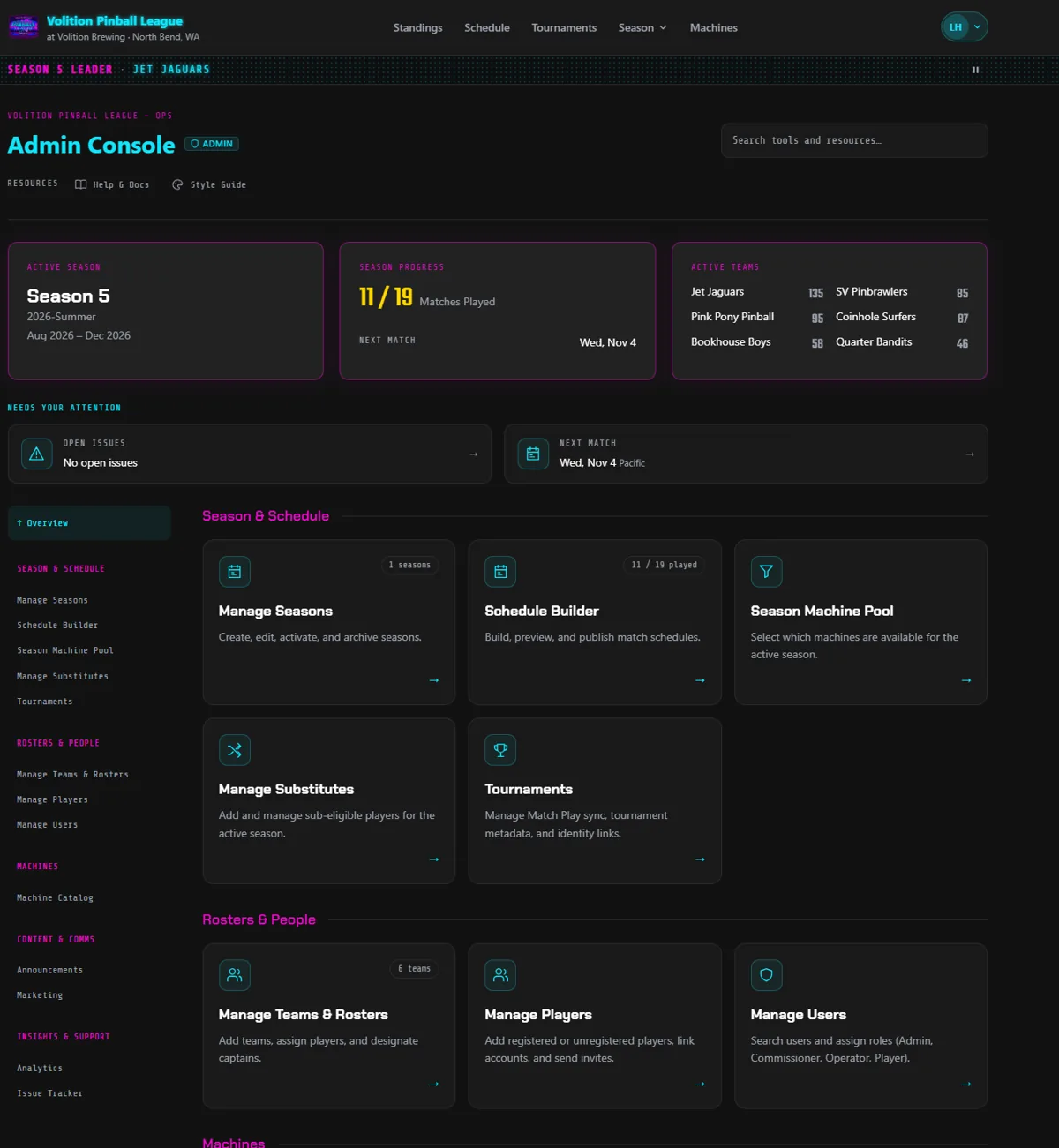
- League console. One admin hub for teams, rosters, captains, player accounts, the schedule builder and each season's machine pool.
- Machine analytics. Weekly audit entries and manufacturer audit imports, charted together, to show which machines earn their floor space.
- Privacy-first site analytics. Referrer, UTM and coarse location insight with no cookies and no consent banner.
- Built to be found. A two-domain search strategy: the brewery site handles local discovery, and the league portal owns every player, team, season, machine and tournament page, all with structured data.
How I built it
AI coding agents wrote the code. Every product decision, design call and quality bar was mine. It started as a passion project: the first version took a few weeks of total time, spread over two months, and new features keep shipping.
For 20 years at Microsoft, from Windows Phone to the Fluent Design System to the first PM seat on what became Microsoft 365 Copilot, my job has been turning ambiguous ideas into shipped product. VPL was a chance to run that playbook end to end on my own, with AI agents as the engineering team.
- Design it before building it. Every feature starts as an interactive, high-fidelity HTML mockup. I review it, mark it up and iterate until it's right, before any production code exists.
- Write a spec an agent can't misread. An approved design becomes a paste-ready agent prompt: what exists today, what must not change, the data model, edge cases, and a step-by-step order with tests between steps. Big features ship in phases so each one builds cleanly on the last.
- Agents build, I direct. Coding agents implement against the spec. I review as creative director, test on real devices, find the gaps and send tight feedback until it's right.
- Systems, not one-off screens. One visual language (the "backglass" system, inspired by dot-matrix displays and pinball cabinet art) and a governed motion library keep a solo-built product coherent across dozens of agent sessions.
- Ship, watch, refine. Real league nights are the test. Analytics and player feedback decide what gets built next.
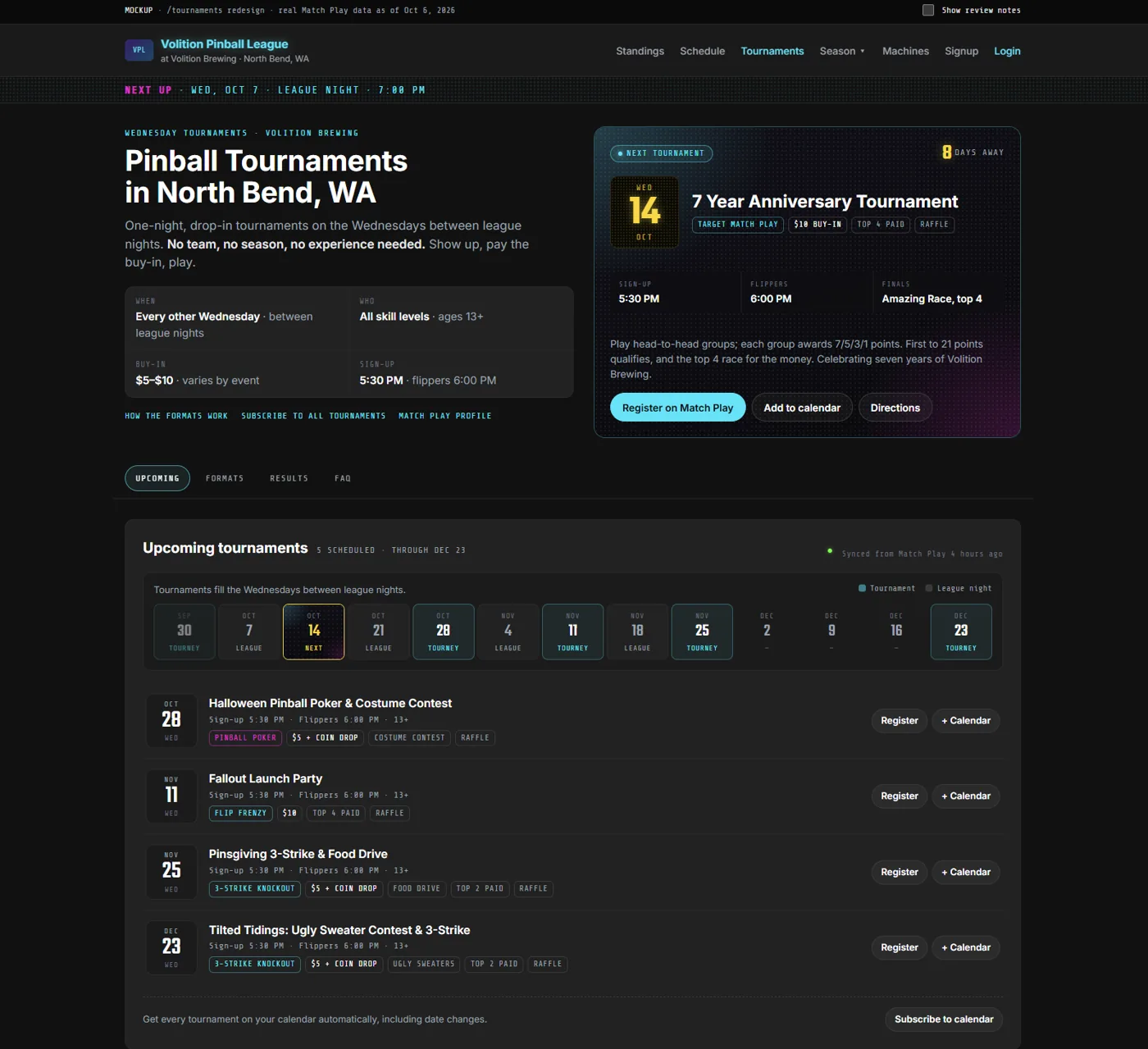 Mockup
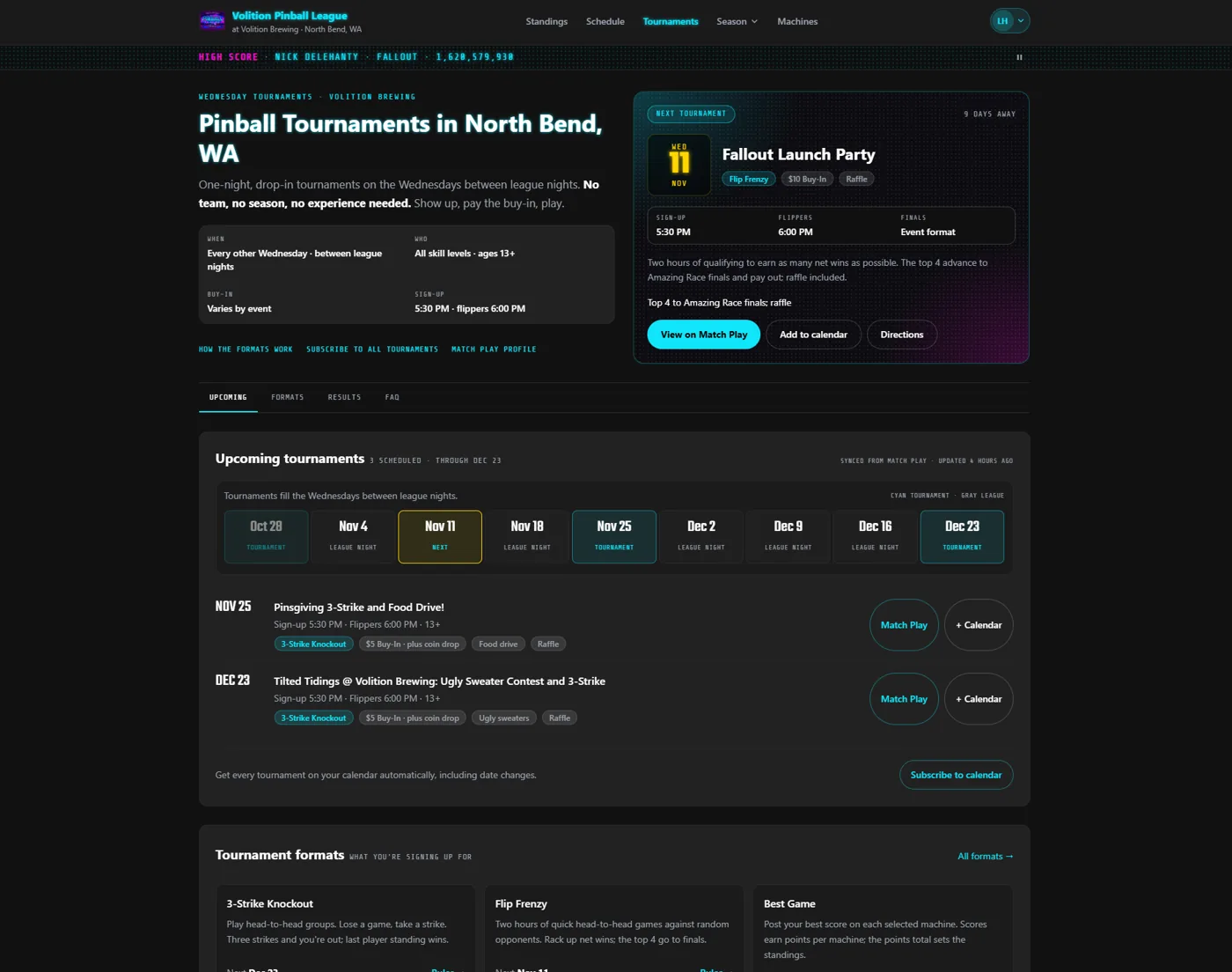 Shipped
The design
The visual identity comes straight from the machines: near-black glass, a dot-matrix texture, and neon cyan and magenta, with amber held back for the one number that matters on each card. The type pairs a techy display face with scoreboard numerals and monospace labels. Motion is restrained everywhere except one signature moment: a DMD-style wipe saved for the scoreboard status strip.
The results
- Running the league went from days of work to hours. The commissioner's job is now setting up the season and communicating dates.
- 40 players across six teams, including subs, all in one place.
- Standings, stats and results update automatically, with no spreadsheet work on match night.
- No more shared-spreadsheet permission and data-entry problems. Every stat lives in one database, ready for analysis.
- That one database made new features possible, including an achievement and award tracking system.
- League history moved out of spreadsheets and into searchable player, team and season pages.
Why it matters
This is my clearest example of where building software is going. With a sharp spec and a high bar, one product leader can now direct AI agents to ship a production platform that used to take a team. Knowing exactly what to build, and holding the line on quality, is the work.